Website Design by Renix Electronics, Inc.





Swimming Pool Plaster
QuartzScapes
Diamond Brite

Water Features

Basic Swimming Pool Plaster information
Click to view QuartzScapes Plaster Colors:
Plaster Color Groupings
The upgraded Plaster colors are grouped by colors, Tier I,
II, II, IV color.
(Tier II, Tier III & Tier IV are the darker colors, and is
slightly more expensive).
-
TIER I
Blue Quartz, Oyster Quartz, Aqua Quartz, Cool Blue, Marlin Blue, Aqua Blue, Ivory, Classic, Blue
-
TIER II
Super Blue, Tahoe Blue, French Grey, Onyx, Verde, Pearl, Mojave Beige
-
TIER III (CARIBBEAN SERIES)
Grenadine Gray, Cayman Green, Barbados Blue, Montego Bay, Bahama Breeze, Aruba Sky, Jamaican Sea, Bermuda Mist, St. Martin Shade, Curaco Night
-
TIER IV
Midnight Blue
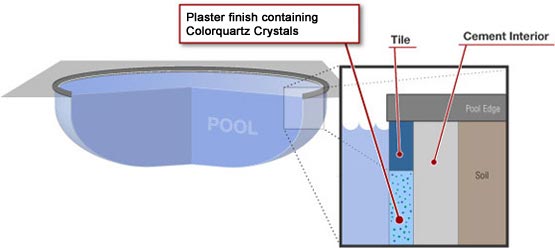
Understanding different Plaster Finishes
Pool Plaster is a combination of white Portland cement, mixed with an aggregate...
- Marcite – a blend of white cement and white marble coupled with several additives that enhance the plasterer’s ability to pump, trowel and cure the plaster.
- Exposed Aggregates – A blend of white cement, and a mix of white marble and natural or ceramic coated quartz aggregates.
- Pebble Finishes – A blend of white cement and high silica content rounded pebbles.
- Quartz Plasters – A blend of white cement and silica quartz
that has been specially sized and graded.
Testing of swimming pool water is typically either on site, at the pool, or you can have a computer analysis of your pool water carried out.
Also see our Pool Water Chemistry page........
"Black Algae"
Black algae is one of the most difficult Algae to control and
eliminate. It appears a black discoloration or a tar-like deposit.
It is difficult to remove because the outer layer is
polymucosaccharide, which acts as a water repellent barrier and
shield the underlying algae from contact with the chemically-treated
water.
In addition to shock treatment, application of a polymer algaecide
is recommended, The pH should be lowered to around 7.2, and pool
jets directed towards the affected areas. Also, by adding a quart
algaecide, it acts as a wetting agent that will help the chemicals
penetrate through the polymucosaccharide barrier.
Too much chemicals
Other than costing you unnecessary money, too much chemicals can damage your equipment. Although the piping is corrosive resistant, the Power Element in the heater might need replacing more often. This gets corroded quicker with high amounts of chlorine, or high amounts of metal in the water.
Discoloration or staining of plaster
Over dosage on chemicals tends too hasten the process of
discoloration of plaster over time. This can be slowed down by
maintaining the correct Ph balance of the pool water.